Let your architecture live in the PR, not the wiki.
Switch on the rules that matter in the panel and tune them per project; have them enforced on every PR, your decisions tracked as numbered ADRs and the dependency map showing what is actually true.
Six situations that come up again and again in this role, and what AppArch does about each one.
01
The rules exist, nobody enforces them
The architecture guidelines were written carefully into the wiki two years ago. Most people who joined since have never opened that page.
What AppArch does
A rule switched on in the panel runs on every merge request, in any of nine languages, flags the violation on its own line and explains why, even while you are on holiday.
A new joiner asks why the service talks to the queue this way. The person who made that call left last year.
What AppArch does
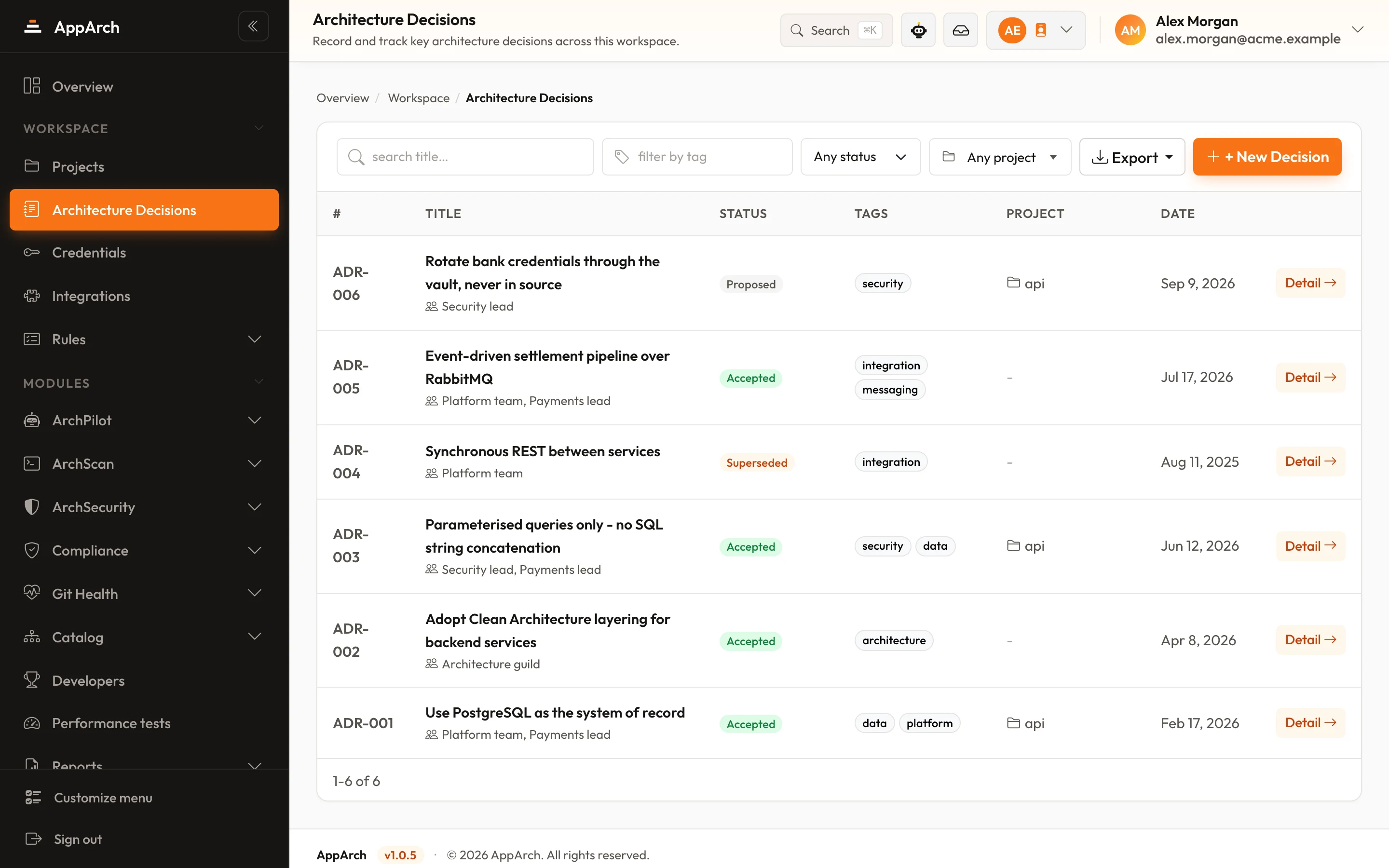
The ADR module numbers every decision, follows it through the MADR lifecycle and links each superseding decision to the one it replaced. The reasoning stays in the product, not in someone's head.
The architecture diagram was drawn for the kickoff meeting. The code took its own path a few months later.
What AppArch does
ArchScan's dependency map is built from the code itself: cycles, layer breaches and leaks show what is, not what was intended. Drift is visible before it compounds.
Five teams, five readings of the same layering rule, and the same debate in every review about which one is right.
What AppArch does
Rules are set once for the workspace and adjusted per project only where there is a real reason. The exception is written down once instead of argued again in every review.
Enable a new rule on a ten-year-old codebase and the backlog fills with thousands of findings overnight. Within a week the team asks for it to be switched off again.
What AppArch does
ArchPilot comments only on the lines a merge request changes, so existing debt stays out of the review. The fail-on setting decides which severity fails the build: start at critical and tighten as the debt shrinks.
Two writes without a transaction, a lookup used without checking it: code that looks fine in review and fails on the first unusual request.
What AppArch does
SmartScan follows every entry point down to the database and lists what can break on the way: an empty lookup, a partial write, a contract gap. Each risk comes with its full path, file and line.
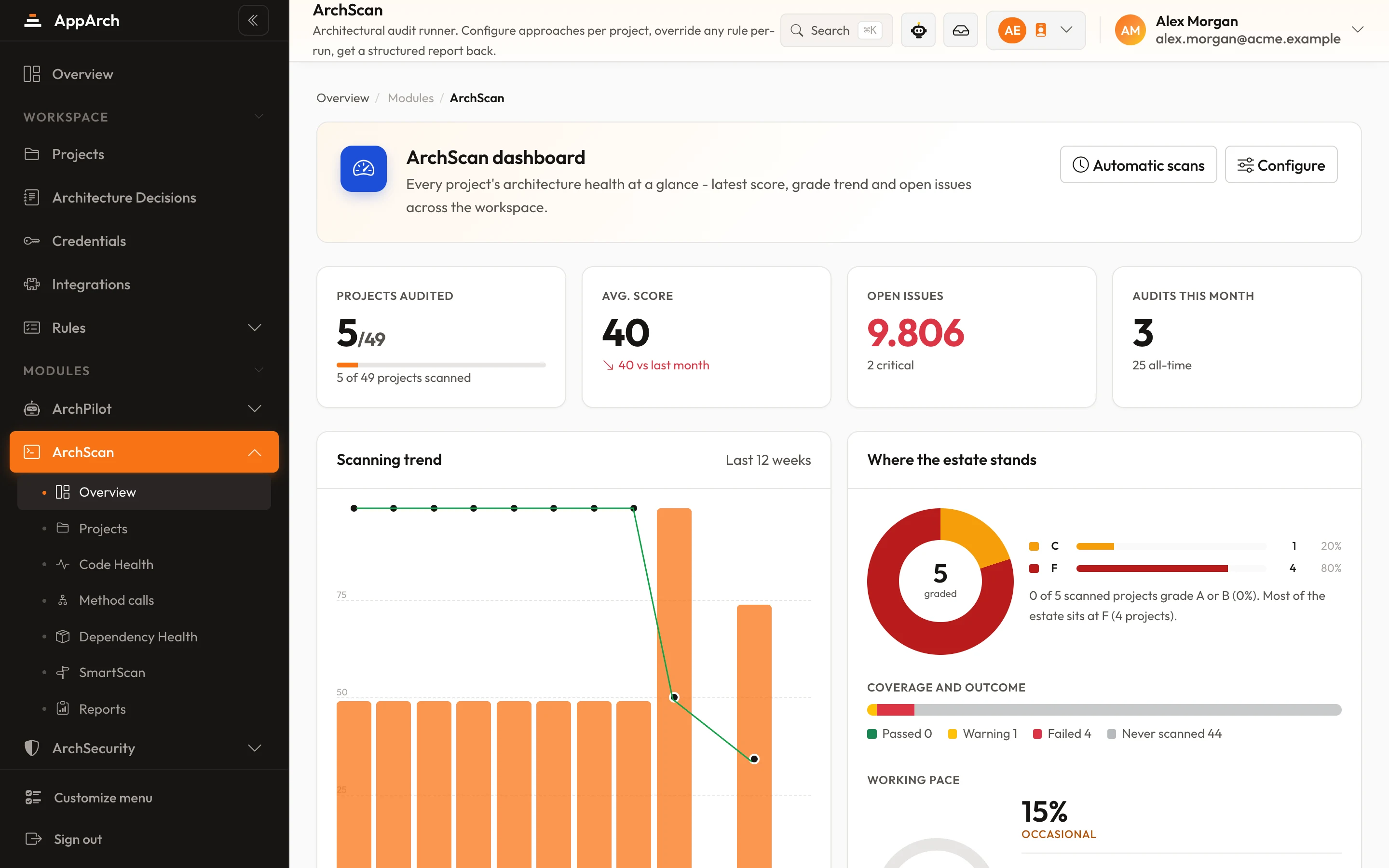
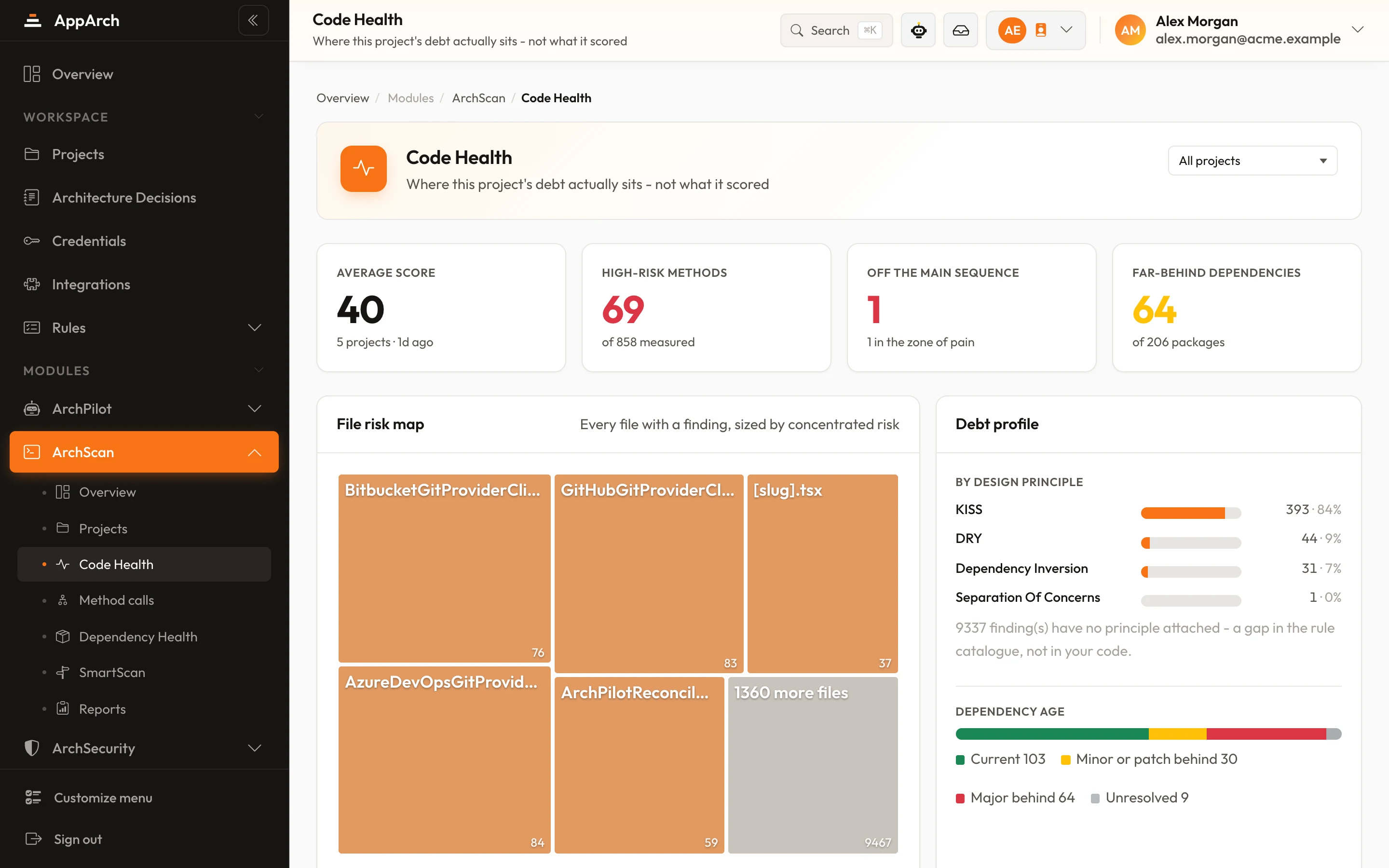
ArchScan dashboardArchitecture health across the estate: projects audited, average score, open issues and the grade distribution.Architecture decisionsNumbered decision records with status, tags and the project each one applies to.Code HealthWhere the debt actually sits: high-risk methods, the files that concentrate findings and how far dependencies lag behind.
We use cookies to improve your experience, analyse traffic and measure how our ads perform. Analytics and advertising cookies are enabled only if you accept. Privacy Policy