One step in the pipeline, full visibility on the board.
The analysis runs in your CI, on your infrastructure; code never leaves. Argo CD, Flux and Kubernetes plug in, which version runs where lives in the catalog, and an air-gapped install is on the table too.
Six situations that come up again and again in this role, and what AppArch does about each one.
01
Every new tool breaks the pipeline a little more
Each scanner wants its own agent, its own server or Docker-in-Docker, and every one adds minutes and new failure modes to the build.
What AppArch does
AppArch is one ready-made job: snippets for GitHub Actions, GitLab CI, Bitbucket Pipelines and Azure Pipelines, and a plain docker run for Jenkins and everything else. No Docker-in-Docker, no agent, no extra server.
Every new tool starts with a security questionnaire, and the first question is always the same: does our source code leave the building?
What AppArch does
The answer is no. Analysis runs on your own runner and only findings travel to the panel, which also runs on your servers. An air-gapped install is the same product.
Incident night. The answer is spread across three clusters, two dashboards and a Slack thread from last Tuesday.
What AppArch does
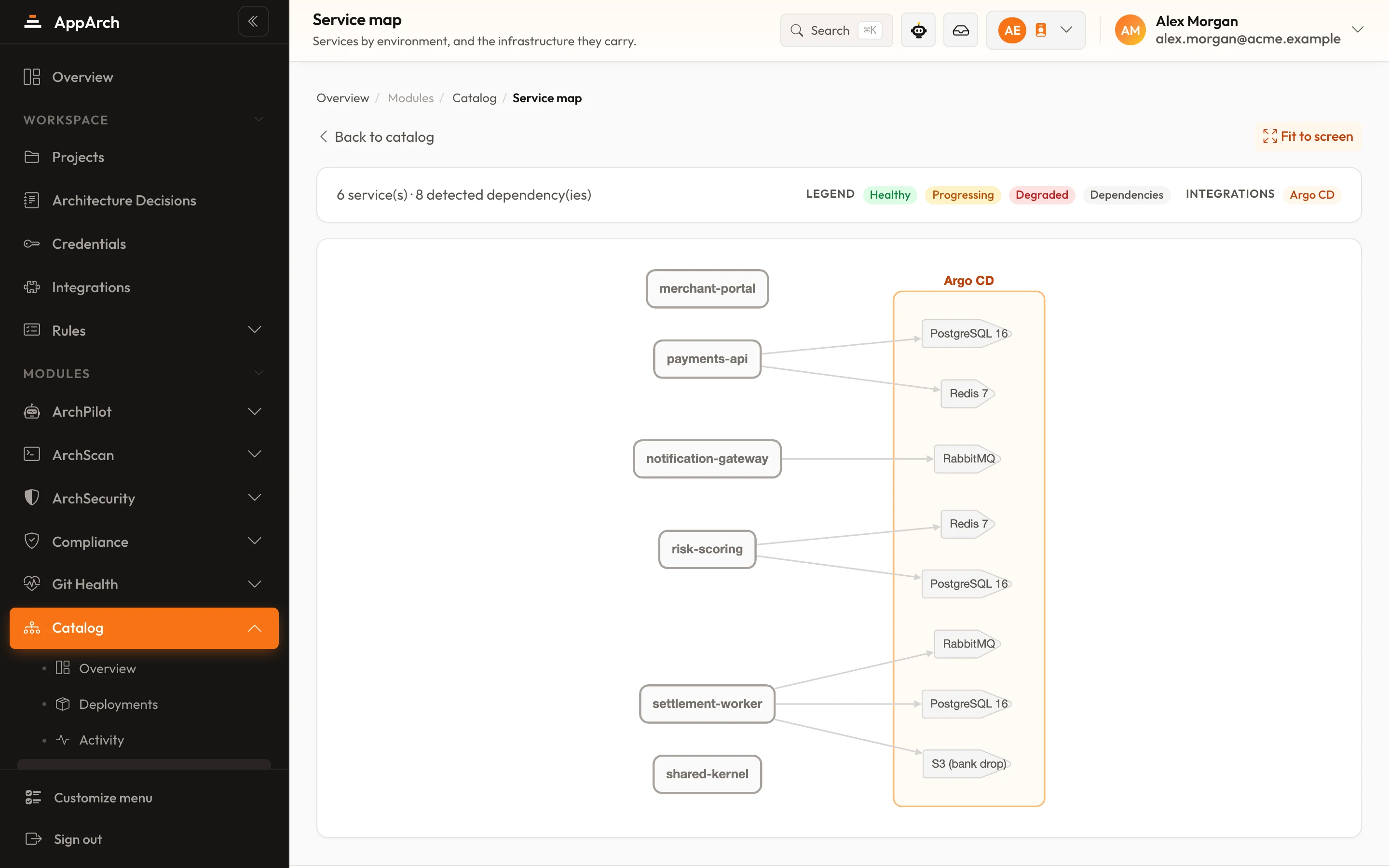
With Argo CD, Flux or Kubernetes connected, the service catalog knows where every service runs and at which version. One screen instead of digging through Slack history.
Static analysis in one place, SonarQube in another, the dependency scanner somewhere else. Nobody sees the whole list, so nobody owns it.
What AppArch does
ArchSecurity lists AppArch's own findings next to those from SonarQube and GitLab security scans, each with its source label, and checks your dependencies against known CVEs.
Every repository is configured a little differently
Someone switched off branch protection for a hotfix in March. Nobody switched it back on, and nobody noticed.
What AppArch does
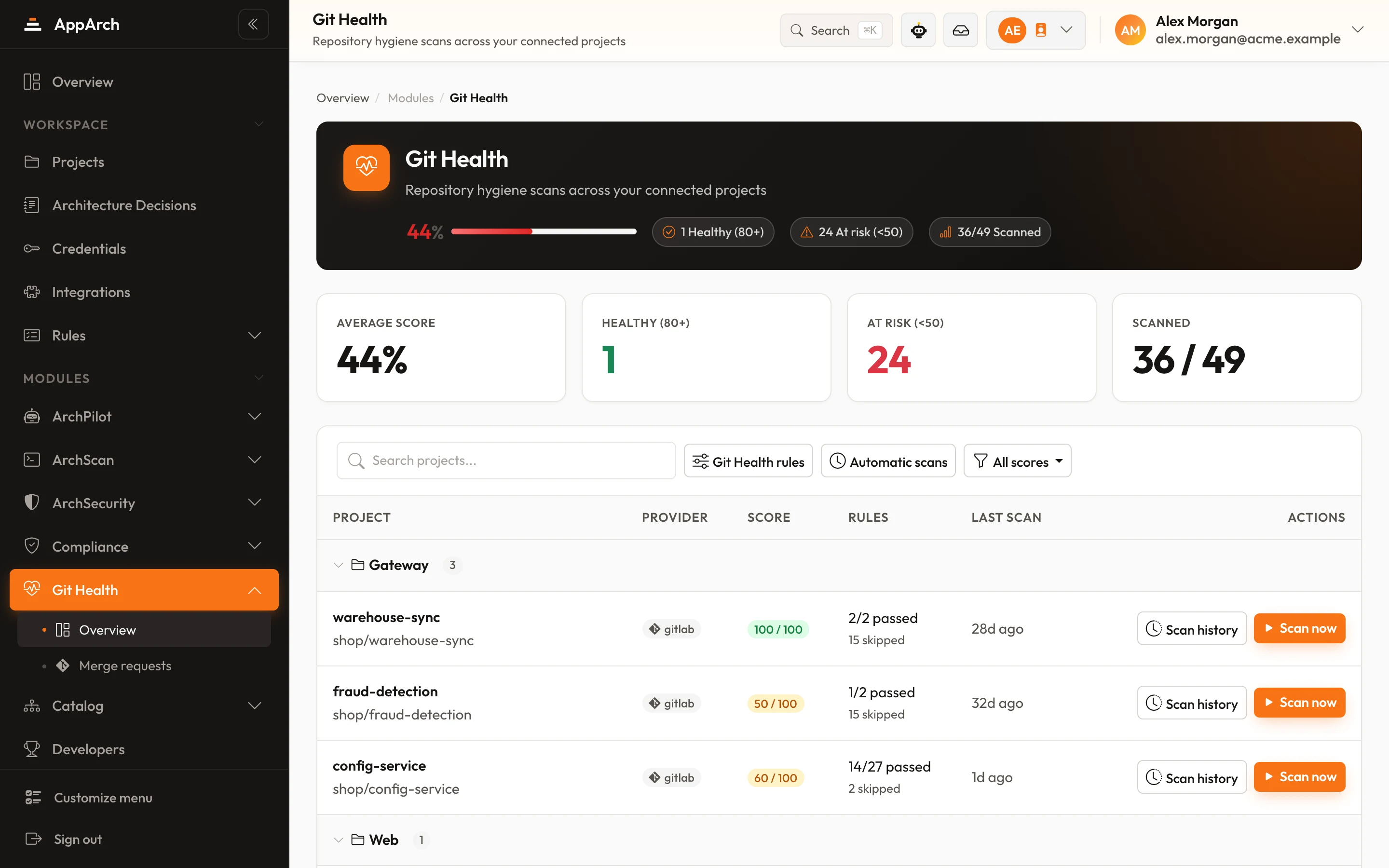
Git Health checks every repository against 29 rules: protected default branch, force push disabled, required approvals, secret scanning and SAST in CI, secret files committed by mistake. Drift shows up as a red row, not as an incident.
Monitoring knows something broke; the pipeline knows what shipped. Change failure rate ends up as a guess on a slide.
What AppArch does
Connect Dynatrace, New Relic or Percona PMM and incident records sit next to deploy records. Change failure rate and time to restore are calculated from them, not estimated.
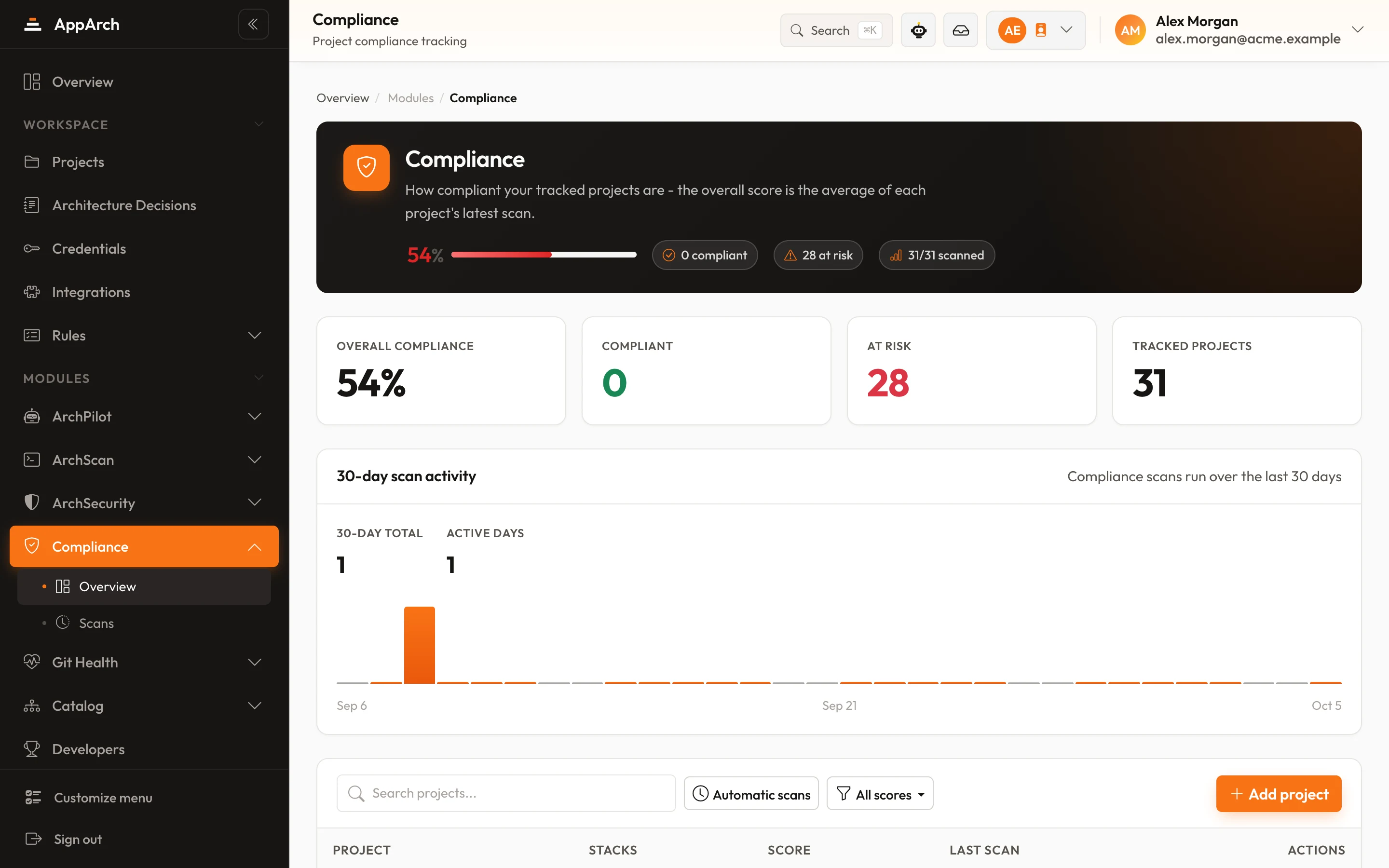
Git HealthRepository hygiene per project: branch protection and merge rules, scored and grouped.ComplianceHow compliant each tracked project is, with the at-risk count and 30 days of scan activity.Service mapServices by environment and the infrastructure they depend on, discovered from deployments.
We use cookies to improve your experience, analyse traffic and measure how our ads perform. Analytics and advertising cookies are enabled only if you accept. Privacy Policy