Code review that explains the reason and suggests the fix.
ArchPilot reviews only the code you changed, comments on the exact line, explains why and suggests the fix. Existing debt stays out of your PR, and a comment you fix closes itself.
Six situations that come up again and again in this role, and what AppArch does about each one.
01
The linter counts style and misses the architecture
The pipeline is green, every semicolon is in place, and the controller still talks straight to the database.
What AppArch does
AppArch looks at the relationships between modules: the UI calling the database directly, the skipped layer, the circular dependency. Not the missing semicolon.
A comment that only says something is wrong leaves you guessing what right looks like, and the review goes into a third round.
What AppArch does
Every ArchPilot comment carries the reasoning and a suggested fix, in your workspace's language, English or Turkish. Disagree? Reply in the thread: the tone is a colleague's, not a bot's.
Push a typo fix and the bot posts the same twelve comments again. By Thursday nobody reads them.
What AppArch does
Findings are keyed, so the same one is never posted twice, and the comment on a violation you fixed resolves itself. Your merge request stays clean and you get back to the code.
The tool is wrong about one case, and says so again on every run until people stop reading anything it says.
What AppArch does
A workspace admin can close a finding as a false positive, an accepted risk or won't fix, with a reason. It stays closed on later runs, and the record keeps who closed it and why.
"Violates the layering principle." Which principle, why does it matter here, and what should the code look like instead?
What AppArch does
Every one of the 1000+ rules in the catalogue has its own documentation page explaining the reasoning, one click from the comment. The Arch handbook explains the patterns behind them.
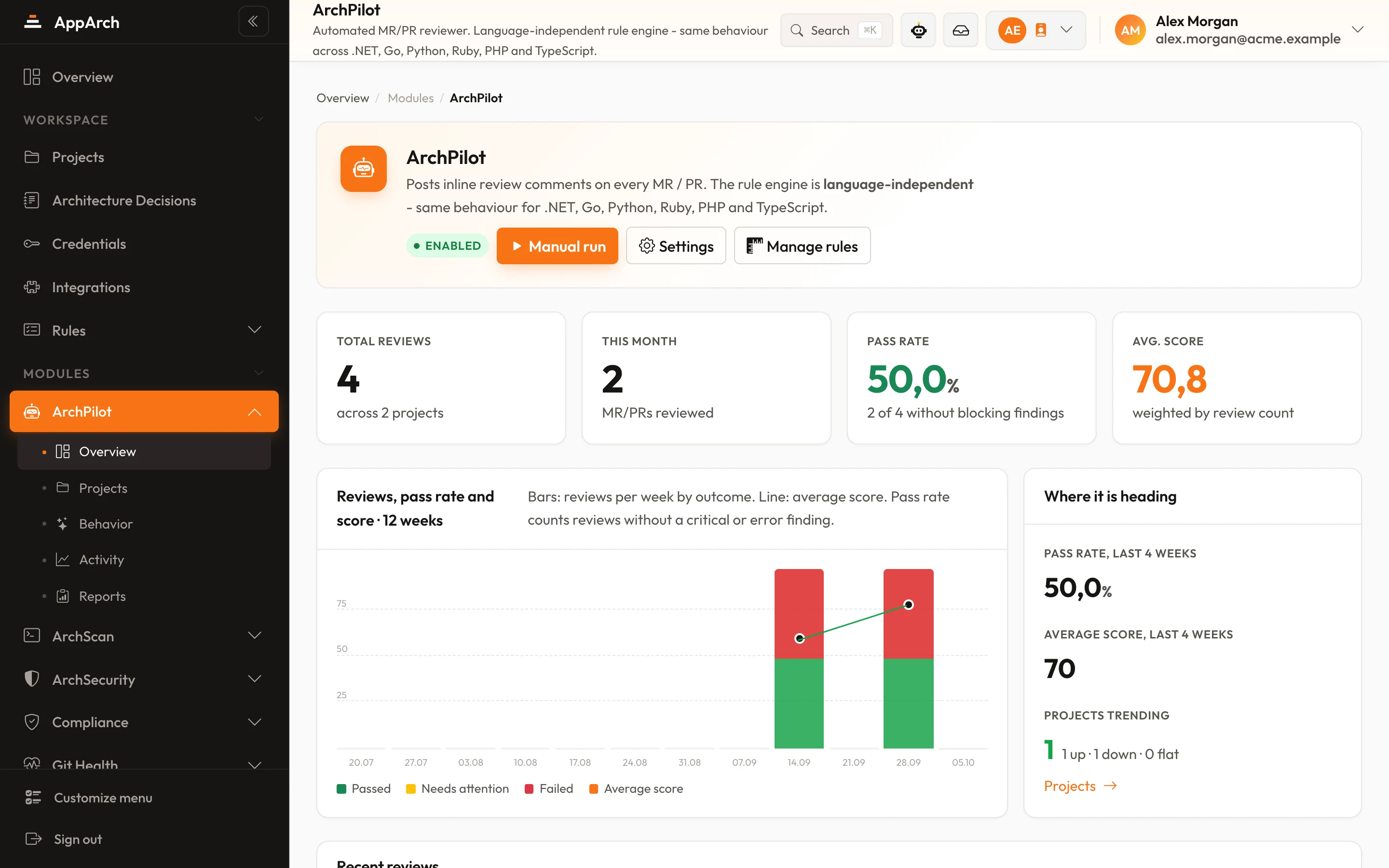
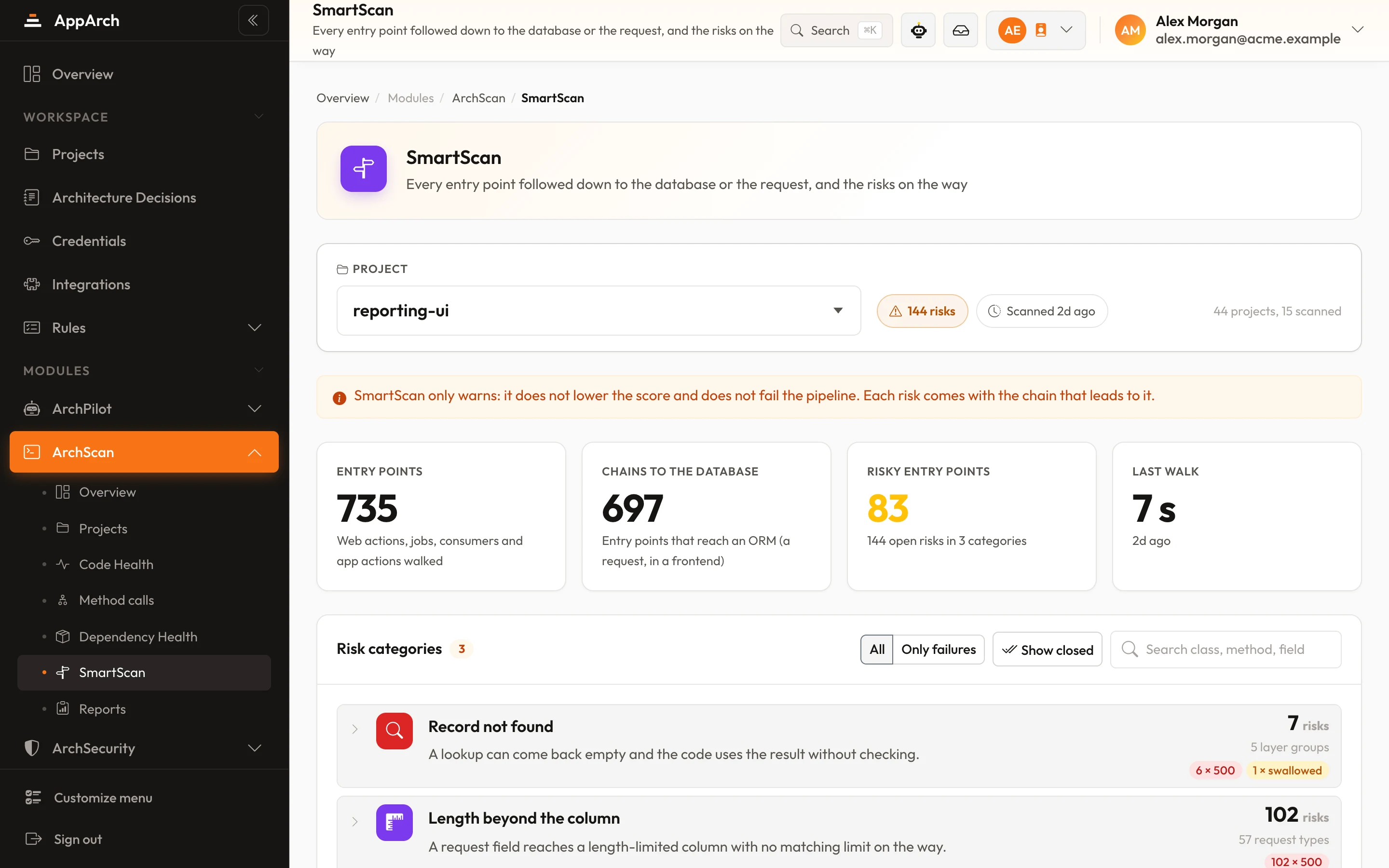
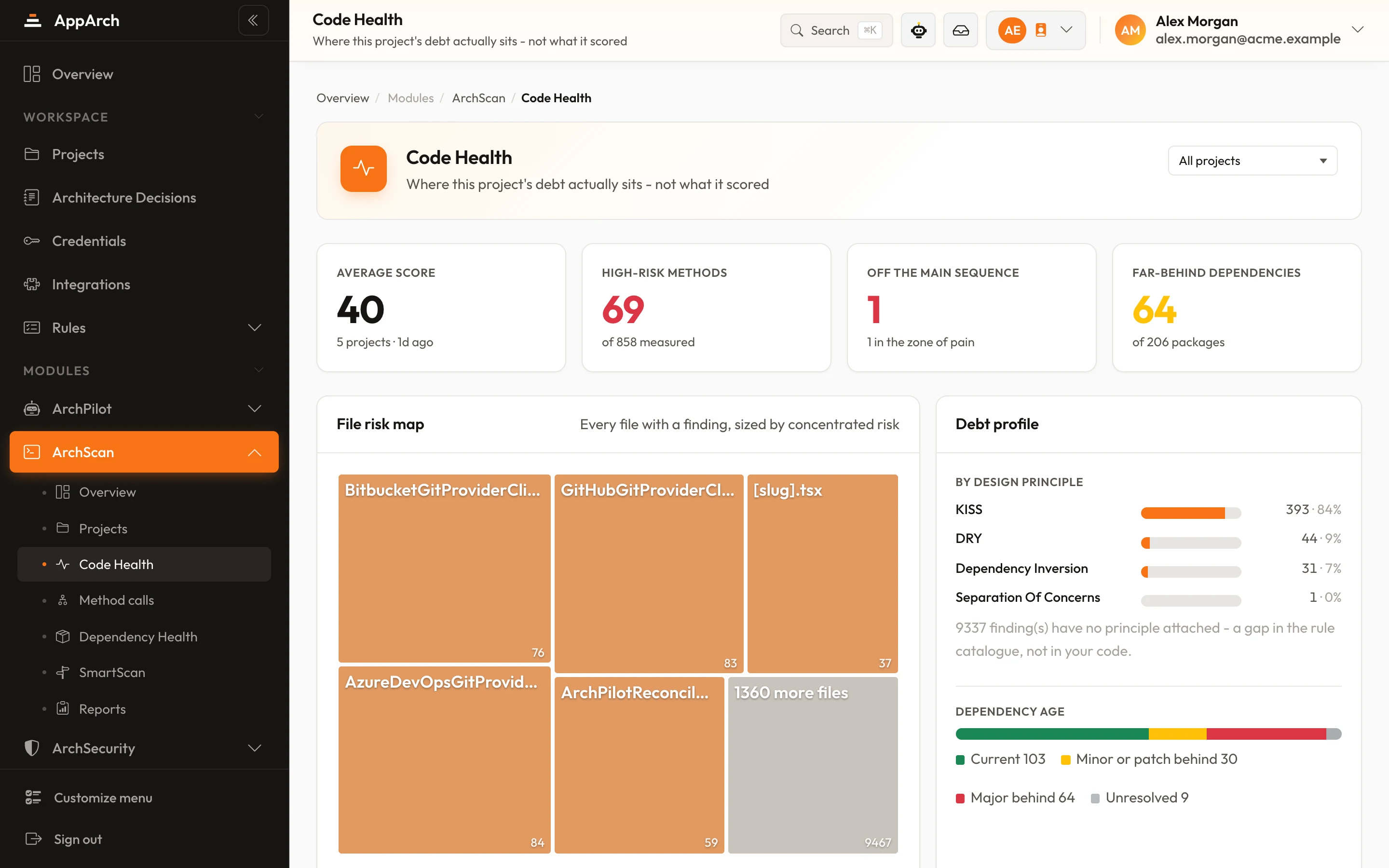
ArchPilotMerge request reviews over time: pass rate, average score and where the trend is heading.SmartScanEvery entry point followed down to the database, with the risks found on the way grouped by category.Code HealthWhere the debt actually sits: high-risk methods, the files that concentrate findings and how far dependencies lag behind.
We use cookies to improve your experience, analyse traffic and measure how our ads perform. Analytics and advertising cookies are enabled only if you accept. Privacy Policy